A chronograph is a complication: a built-in stopwatch that measures elapsed time using extra pushers and sub-dials. A chronometer is a watch whose movement has passed an independent precision test and runs within a certified accuracy standard. One is a function; the other is a certification. The two words look alike and sound alike, but they describe entirely different things, and a single watch can be both, either, or neither.
The confusion is understandable. Both words trace back to the Greek khrónos, "time." A chronograph adds graphein, "to write": literally a time-writer, because the earliest models recorded elapsed time in ink on a rotating dial. A chronometer adds métron, "measure": a time-measurer, named for its accuracy. So one term is about what the watch does, and the other is about how well it keeps time. Get that distinction straight and most of the vocabulary that surrounds it falls into place.
This guide is also the index to Dialist's wider glossary. Wherever a term is worth its own entry, we link to it, so you can read this as a single answer or use it as a map of horological language.
What is a chronograph?
A chronograph is a watch with an integrated stopwatch. Press the top pusher (usually at 2 o'clock) to start timing, press it again to stop, and press the lower pusher (at 4 o'clock) to reset to zero. Elapsed time is read off small sub-dials (typically counters for elapsed seconds, minutes, and sometimes hours), while the main dial keeps showing the time of day.
That dual nature is the whole point: a chronograph lets you measure an interval without disturbing the running time on the central hands.
Key things to know:
- It is a complication. In watchmaking, any function beyond plain hours, minutes, and seconds is a "complication." The chronograph is one of the most popular.
- The central seconds hand is the stopwatch hand, not the running seconds. On most chronographs the running seconds sit in a small sub-dial, while the large central sweep hand stays still until you start timing.
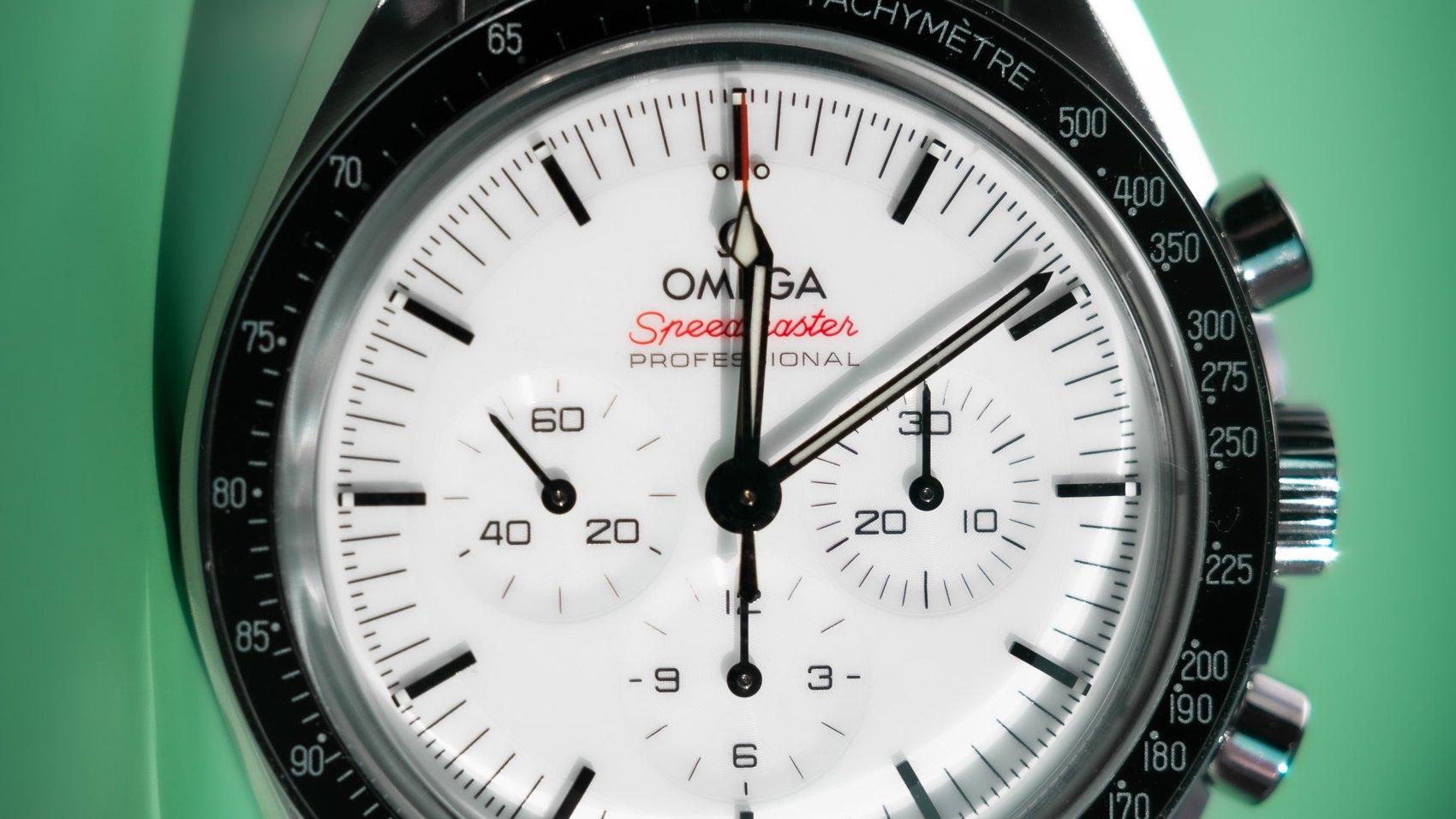
- Sub-dials are counters. A three-register layout usually means a 30-minute counter, a 12-hour counter, and a running-seconds dial: the arrangement seen on the Omega Speedmaster.
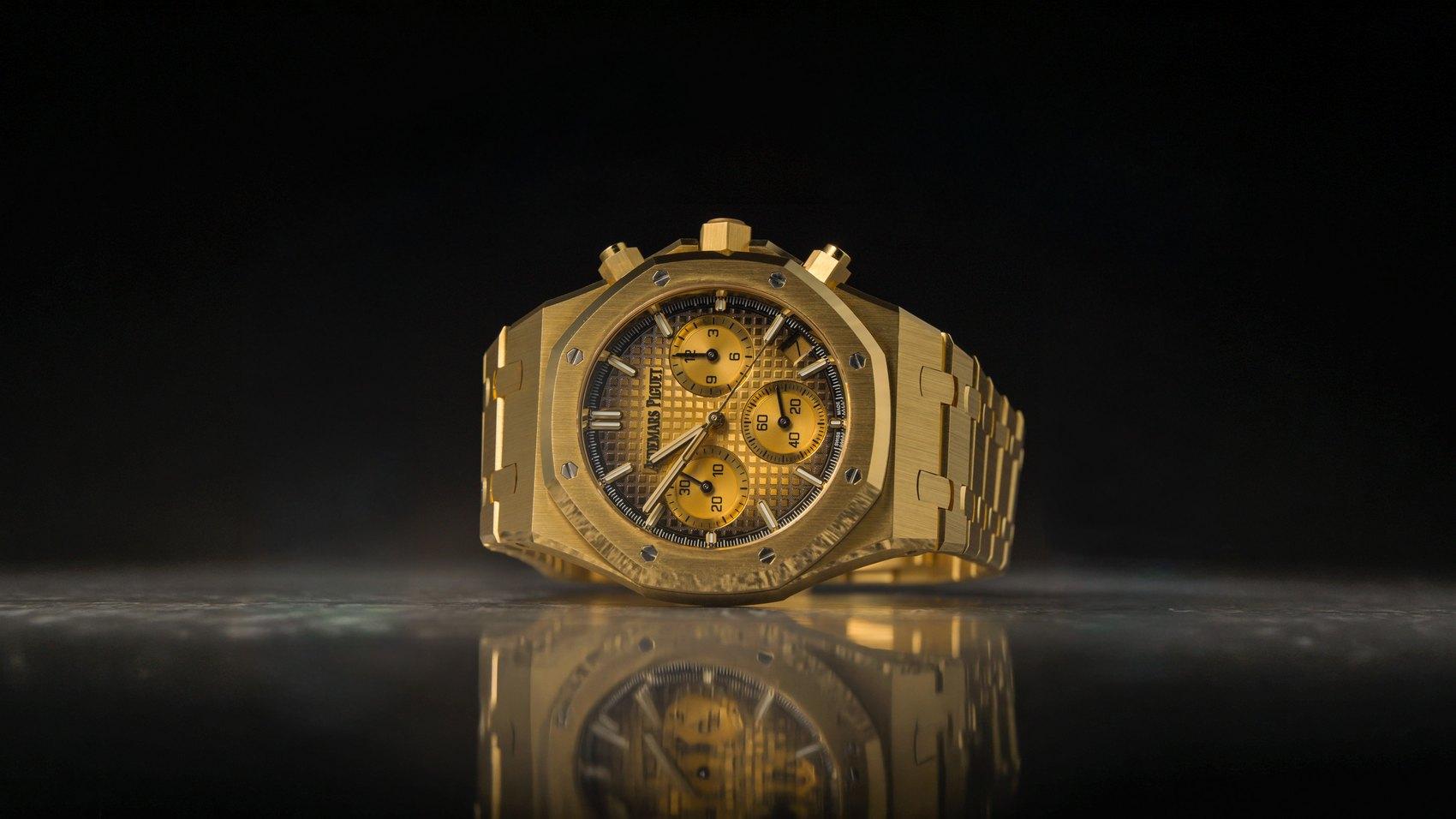
A chronograph can be wonderfully complex: a flyback resets and restarts in a single press; a rattrapante (split-seconds) times two events at once. But at heart, a chronograph is simply a watch you can use as a stopwatch.
Takeaway: "Chronograph" tells you the watch has a timing function. It says nothing about how accurately it runs.
What is a chronometer?
A chronometer is a watch whose movement has been independently tested and certified to keep time within a strict tolerance. It is a quality benchmark, not a feature you operate.
The word is regulated in Switzerland: a watch may only be called a chronometer if its movement has passed certification by an accredited body. The best-known is the COSC: the Contrôle Officiel Suisse des Chronomètres, the official Swiss chronometer testing institute, which has certified movements since 1973.
To earn COSC certification, a mechanical movement is tested for 15 days, in five positions, at three temperatures (roughly 8°C, 23°C, and 38°C), against the ISO 3159 standard. The headline criterion is an average daily rate of −4 to +6 seconds per day. COSC treats those figures as absolute limits. Results are not rounded in the movement's favour.
So a chronometer is, in plain terms, a watch that a third party has confirmed keeps very good time. The certificate travels with the movement, not the function on the dial.
Takeaway: "Chronometer" is a precision certification. It says nothing about whether the watch can time a lap.
Chronograph vs chronometer: the side-by-side answer
| Chronograph | Chronometer | |
|---|---|---|
| What it is | A complication (a function) | A certification (a quality standard) |
| What it does | Measures elapsed time like a stopwatch | Guarantees the watch keeps time within a set tolerance |
| How you spot it | Extra pushers and sub-dial counters on the dial | Often marked "Chronometer" on the dial; backed by a certificate |
| Greek root | graphein: "to write" (record time) | métron: "to measure" (precise time) |
| Who confers it | The watchmaker, by building the mechanism | An independent body (e.g. COSC) after testing |
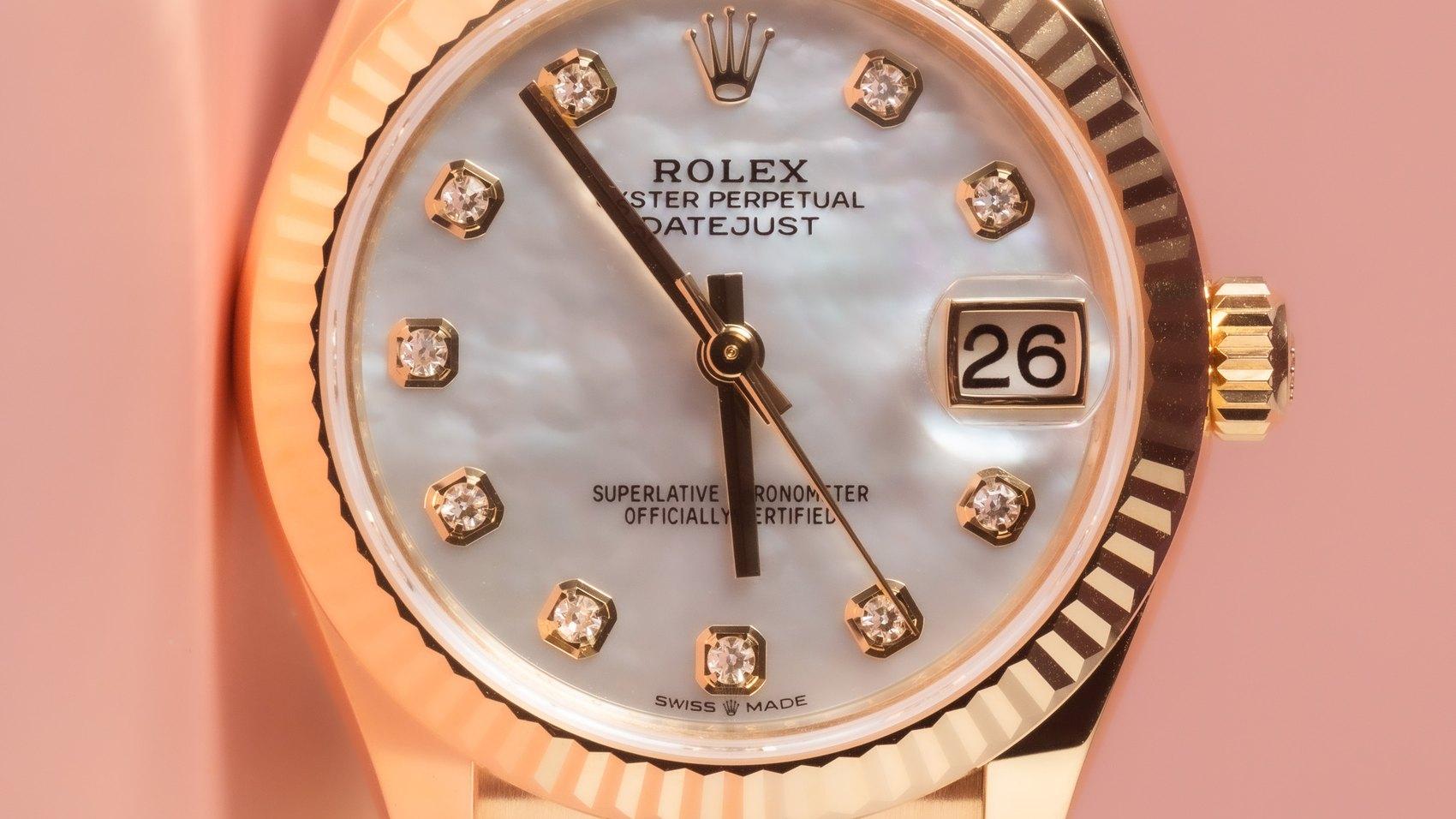
| Typical example | Omega Speedmaster, Breitling Navitimer, TAG Heuer Carrera | Rolex Datejust (Superlative Chronometer), Omega (Master Chronometer) |
The clearest way to remember it: a chronograph is something the watch does; a chronometer is something the watch is certified to be. A watch can be both at once (a chronograph that is also a certified chronometer), but the two qualities are earned independently.
Can a watch be both a chronograph and a chronometer?
Yes, and many fine watches are. A chronograph movement can be sent for chronometer testing like any other, and if it meets the standard, it earns the certification.
The classic illustration is the Omega Speedmaster. The original Moonwatch (reference ST 105.012, powered by the manually wound Calibre 321) was the watch Buzz Aldrin wore on the lunar surface in 1969, and the only chronograph NASA flight-qualified for crewed missions after its 1965 testing. That is a chronograph by function. Many modern Speedmasters carry chronometer (and Master Chronometer) certification too, making them chronographs and certified for precision.
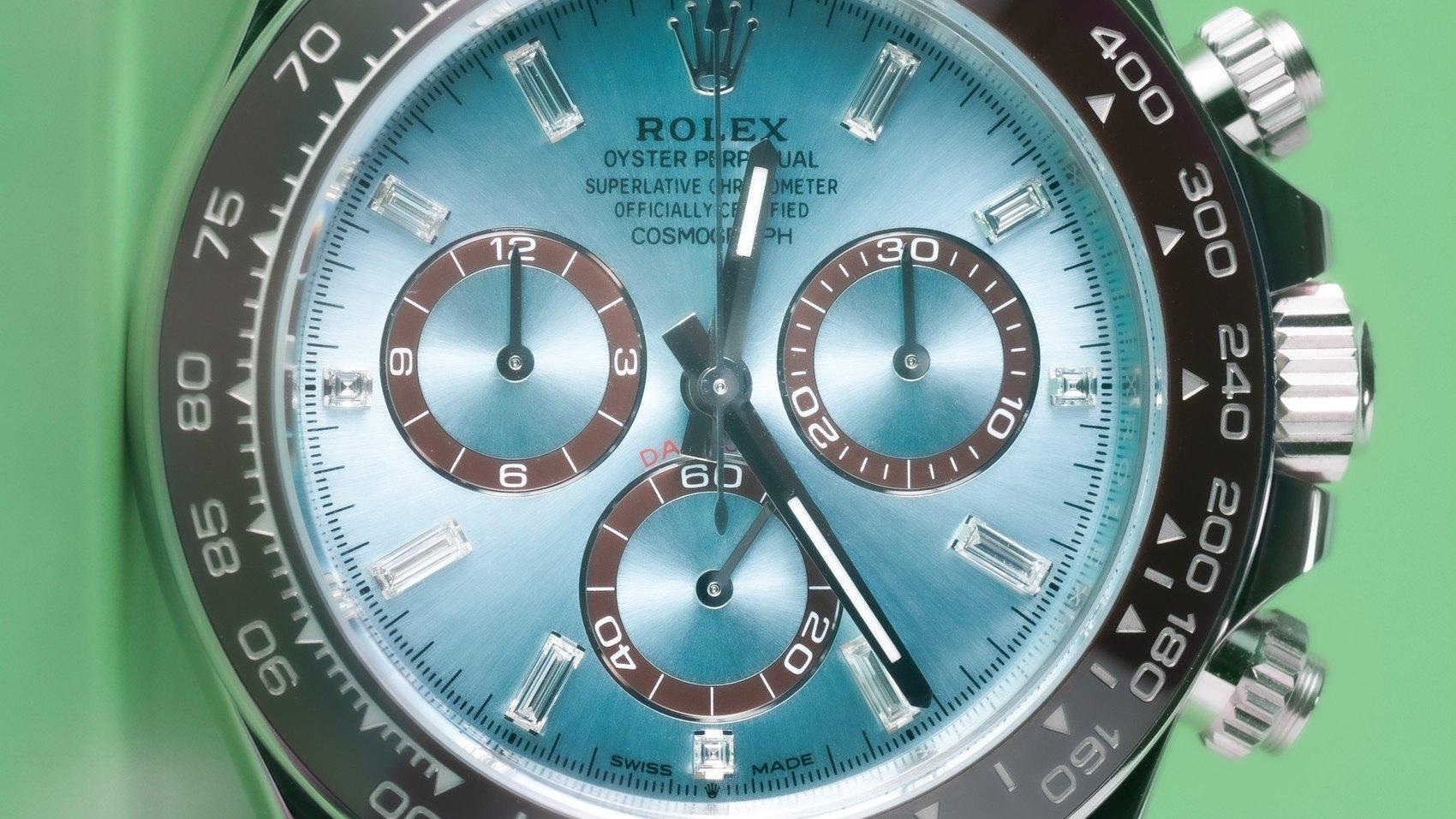
The reverse is also common: a simple three-hand dress watch with no stopwatch at all can be a chronometer. Most Rolex models, for instance, are certified chronometers but are not chronographs (the Daytona being the famous exception: it is both).
A short glossary of the watch terms collectors confuse
These are the terms that most often get tangled with chronograph and chronometer. Each links to its full Dialist entry where one exists.
- Complication: Any watch function beyond hours, minutes, and seconds. A chronograph is a complication; so are the date, a GMT hand, a perpetual calendar, and a tourbillon.
- Movement (calibre): The mechanical or quartz engine inside the watch. "Calibre" is a specific movement's name or number (e.g. Calibre 321).
- Automatic vs manual: An automatic (self-winding) movement winds itself from the motion of your wrist via a rotor; a manual movement is wound by hand at the crown.
- COSC: The Swiss body that certifies chronometers against the −4/+6 seconds-per-day standard. "COSC-certified" and "chronometer" mean effectively the same thing in Switzerland.
- Master Chronometer / METAS: A stricter standard, introduced by Omega in 2015 with the Swiss Federal Institute of Metrology (METAS). A Master Chronometer must first pass COSC, then meet 0 to +5 seconds per day and resist magnetic fields of 15,000 gauss, tested in the fully cased watch.
- Superlative Chronometer: Rolex's in-house designation for movements it certifies to −2/+2 seconds per day after COSC testing, tighter than COSC's baseline.
- Flyback: A chronograph that resets and restarts in a single press, without stopping first. Longines built the first flyback wrist chronographs in the 1920s.
- Tachymeter: The scale on many chronograph bezels (like the Speedmaster's) used to calculate speed over a known distance. It is a feature of a chronograph, not a separate complication.
Quick rule of thumb: if the word describes something the watch can do, it's a function. If it describes a tested level of performance, it's a certification.
Why the difference matters when you buy
For a collector, the distinction is practical, not pedantic.
- A dial marked "Chronometer" is a claim about precision that should be backed by certification (worth confirming when you buy pre-owned).
- A chronograph is about how you'll use the watch: timing, sport, mechanical theatre on the wrist.
- The two command value for different reasons: a chronograph for its mechanism and design heritage; a chronometer for its verified accuracy.
When a watch is authenticated properly, its movement, calibre, and any certification markings are all checked against the reference, which is exactly where these terms stop being trivia and start protecting your money. (More on that in how to authenticate a luxury watch.)
FAQ
What is the difference between a chronograph and a chronometer?
A chronograph is a complication: a stopwatch built into a watch, operated with pushers and read on sub-dials. A chronometer is a watch whose movement has passed an independent precision test (such as COSC certification) and runs within a guaranteed tolerance. One is a function; the other is a certification, and a watch can be both.
Is a chronograph more accurate than a chronometer?
No. A chronograph is not inherently accurate at all. It simply adds a timing function. A chronometer is, by definition, certified for accuracy (typically −4 to +6 seconds per day under COSC). If accuracy is your priority, look for "chronometer," not "chronograph."
What does COSC certification mean?
COSC (Contrôle Officiel Suisse des Chronomètres) is the official Swiss institute that tests movements for precision. A movement is run for 15 days in five positions and three temperatures, and must average −4 to +6 seconds per day to pass. Only certified movements may legally be called "chronometers" in Switzerland.
Can a watch be both a chronograph and a chronometer?
Yes. A chronograph movement can be submitted for chronometer certification like any other. Many modern Omega Speedmasters and the Rolex Daytona, for example, are chronographs that also carry chronometer certification. They time intervals and are tested for precision.
Why are chronograph and chronometer spelled so similarly?
Both come from the Greek khrónos, "time." Chronograph adds graphein, "to write" (it records elapsed time); chronometer adds métron, "to measure" (it keeps precise time). The shared root is why they're so easily confused, but the second half of each word reveals what it actually means.
Does "chronometer" on a dial guarantee accuracy today?
It indicates the movement met a certification standard when it left the factory. Accuracy can drift over years of wear, knocks, or a lapsed service, so a chronometer-marked watch still benefits from regular servicing. On the pre-owned market, it's worth confirming the certification and the watch's service history.