A Rolex carries two distinct numbers, and they do different jobs. The reference number identifies the watch (model family, bezel, and case metal) and is engraved between the lugs at the 12 o'clock side of the case. The serial number identifies the individual example and dates roughly when it was made; it sits between the lugs at the 6 o'clock side on older watches, and is laser-etched on the rehaut (the inner flange between dial and crystal) on most watches made from around 2008 onward. Read together, the two numbers tell you what a Rolex is and roughly when it left Geneva.
This guide explains where to find each number, how to decode a modern reference digit by digit, and how to date a watch using the serial-by-year lookup table below. It is a starting point for orientation, not a substitute for a full physical authentication. Paperwork and engravings can be faked, so a number that "checks out" is necessary but never sufficient.
Where are the reference and serial numbers on a Rolex?
On almost every modern Rolex, both numbers are engraved into the case between the lugs, hidden beneath the bracelet. To see them you have to remove the bracelet, a job best left to a watchmaker, because a slipped spring-bar tool scratches lugs and voids confidence in original condition.
- Reference number: engraved on the case edge between the upper lugs, at the 12 o'clock side.
- Serial number: engraved between the lower lugs, at the 6 o'clock side, on watches made up to the mid-2000s.
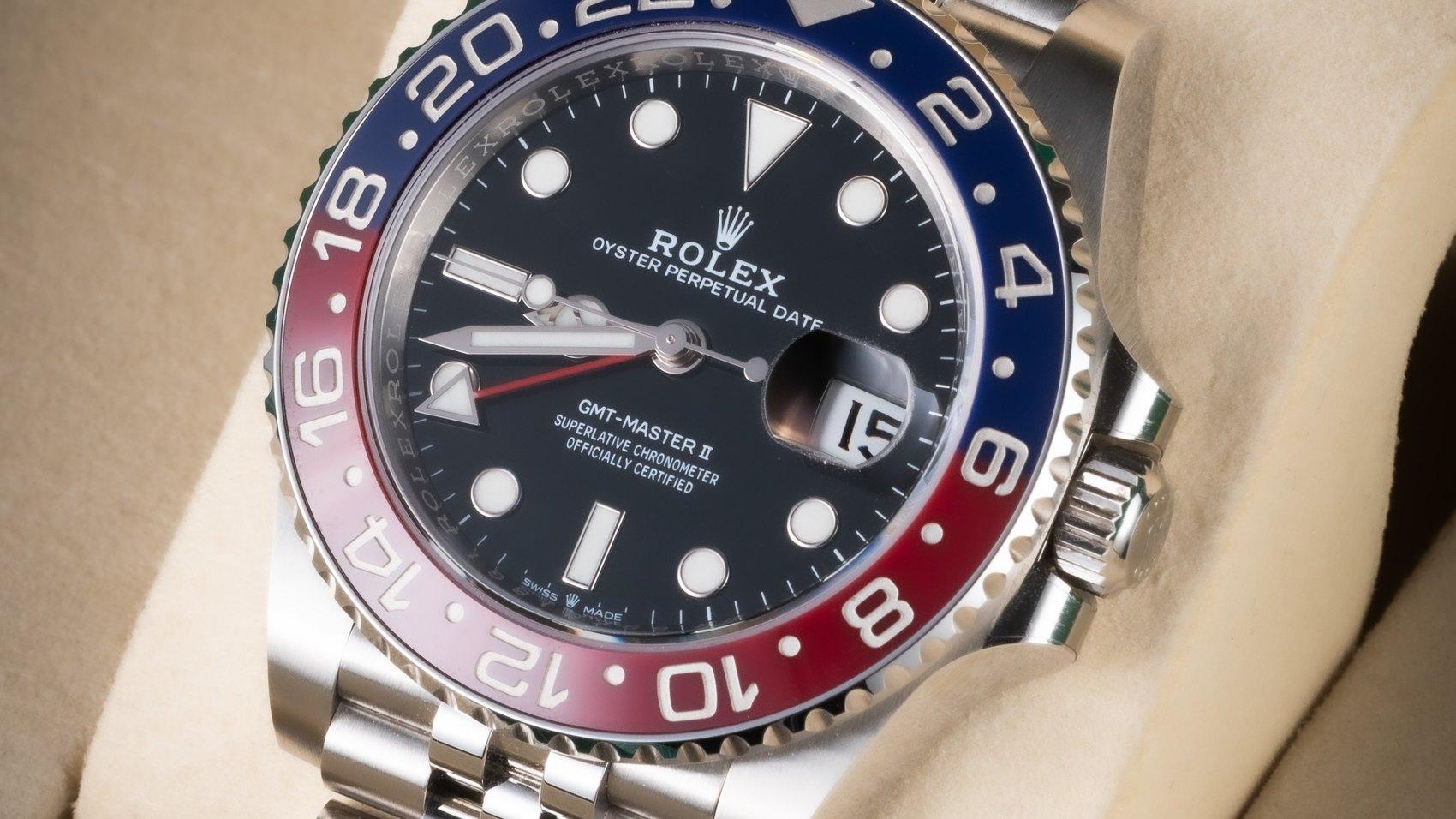
From roughly 2005 Rolex began also engraving the serial onto the rehaut, the inner ring of metal between the dial and the crystal, visible from the front without removing anything. By around 2008 the serial moved to the rehaut more or less exclusively, with the word "ROLEX" repeated around the flange and the serial typically at the 6 o'clock position. If your watch has a serial laser-etched on the rehaut, it almost certainly dates from 2008 or later, itself a useful authentication clue.
How do you read a Rolex reference number?
A modern Rolex reference is usually five or six digits, sometimes followed by letters. The digits are not random; they encode the watch's anatomy. Reading left to right:
| Position | What it tells you | Example (126610) |
|---|---|---|
| First 3–4 digits | Model family | 1266 → Submariner Date (current generation) |
| Second-to-last digit | Bezel type | 1 → rotating dive bezel |
| Last digit | Case metal | 0 → Oystersteel |
| Trailing letters | Bezel colour / gem set | e.g. LN = "lunette noire" (black bezel) |
So 126610LN reads as: current-generation Submariner Date, rotating bezel, stainless steel, black bezel insert. Earlier generations follow the same logic: the five-digit 16610 is the previous Submariner Date, and the four-digit 1680 is the first Submariner with a date.
What does the last digit (case metal) mean?
The final digit is the most useful single character for a quick gut-check, because metal is hard to fake convincingly. Common modern codes:
| Last digit | Case material |
|---|---|
| 0 | Oystersteel (stainless) |
| 1 | Steel and Everose gold (Rolesor) |
| 3 | Steel and yellow gold (Rolesor) |
| 4 | Steel and white gold |
| 5 | Everose gold (solid) |
| 6 | Platinum |
| 7 | RLX titanium (modern) |
| 8 | 18k yellow gold (solid) |
| 9 | 18k white gold (solid) |
A reference ending in 8 on a watch that feels suspiciously light is an immediate red flag. Solid gold has unmistakable heft. Note that older references don't always follow this scheme perfectly, so treat it as a strong guide rather than an iron law.
What does the bezel digit mean?
The second-to-last digit indicates the bezel style. The most common modern codes are 0 (smooth or domed), 1 (engine-turned or, on tool watches, a rotating bezel), 2 (engraved), and 3 (fluted), the fluted bezel being the classic gold or white-gold Datejust signature. As with the metal code, vintage references can diverge, but the pattern holds across the current catalogue.
How do I find the year my Rolex was made?
Rolex has never published an official serial-to-year register, so all dating charts are community-compiled estimates assembled by dealers and collectors from dated paperwork over decades. They are accurate to within a year or so for most modern watches, close enough to confirm a period, not to pin an exact date.
There are three broad serial eras:
- All-numeric (pre-1987): sequential numbers running into the millions. A serial around 5,000,000 corresponds to roughly 1978; numbers climbed steadily from the brand's early days.
- Letter-prefix (≈1987–2010): a single letter followed by digits, for example R123456. The letter is the key to the year.
- Random / "scrambled" (≈2010 onward): an eight-character alphanumeric serial with no decodable pattern. Rolex deliberately randomised serials around 2010 to frustrate counterfeiters who had learned to predict them. A truly random serial cannot be decoded to a year. You date these watches by reference generation, rehaut style, and any dated guarantee card instead.
Rolex serial number by year (letter-prefix era)
The table below maps the letter-prefix serials to their approximate production years. These are widely used collector estimates, not official Rolex data.
| Serial prefix | Approx. year |
|---|---|
| R | 1987 |
| L | 1989 |
| E | 1990 |
| X | 1991 |
| N | 1991 |
| C | 1992 |
| S | 1993–1994 |
| W | 1995 |
| T / U | 1996–1997 |
| A | 1998–1999 |
| P | 2000 |
| K | 2001 |
| Y | 2002 |
| F | 2003–2004 |
| D | 2005–2006 |
| Z | 2006–2007 |
| M | 2007–2008 |
| V | 2008–2009 |
| G | 2010 |
| Random (8 characters) | ≈2010 onward |
If your serial is a single letter plus numbers, find the letter above for an approximate year. If it's eight scrambled characters, your watch is roughly 2010 or newer and cannot be dated by serial alone. Use the rehaut engraving and reference generation instead.
Why the numbers alone don't prove a Rolex is genuine
A matching reference and a plausible serial are reassuring, but they are the easiest things for a forger to copy. Counterfeiters routinely lift real reference numbers from catalogues and etch convincing rehauts. Dating and decoding tell you whether a watch is internally consistent (whether the reference, serial era, rehaut style, and claimed model all agree), not whether the object in your hand is authentic.
Genuine authentication goes further: case and movement construction, the quality of the rehaut laser-etching, the cyclops magnification, the bracelet clasp codes, and the movement itself, ideally opened by a trained watchmaker. Use the numbers to spot contradictions (a "2003" serial on a watch with a rehaut serial, say) and let a specialist confirm the rest. For the full workflow, see our guide to authenticating a luxury watch.
Key takeaways
- Reference number = what the watch is (model, bezel, metal); engraved at 12 o'clock between the lugs.
- Serial number = which example it is and roughly when it was made; at 6 o'clock between the lugs, or on the rehaut from ~2008.
- Last digit of the reference decodes the case metal; the second-to-last decodes the bezel.
- Letter-prefix serials (1987–2010) can be dated from a chart; random serials (2010+) cannot and need other evidence.
- Numbers confirm consistency, not authenticity. Always finish with a physical inspection.
FAQ
Where is the serial number on a newer Rolex?
On Rolex watches made from around 2008 onward, the serial is laser-etched on the rehaut, the inner flange between the dial and the crystal, usually at the 6 o'clock position, with "ROLEX" repeated around the ring. You can read it through the crystal without removing the bracelet. Watches made before the mid-2000s carry the serial between the lower lugs instead.
Can I tell the exact year my Rolex was made from the serial?
Not exactly. Serial-to-year charts are community estimates, accurate to within about a year for letter-prefix watches (1987–2010). Watches with random eight-character serials (roughly 2010 onward) can't be dated from the serial at all. You estimate their age from the reference generation and any dated guarantee card.
What does a six-digit Rolex reference number mean?
A six-digit reference encodes the watch in order: the first three to four digits give the model family, the second-to-last digit gives the bezel type, and the last digit gives the case metal. Trailing letters indicate bezel colour or gem-setting. For example, 126610LN is a steel Submariner Date with a black bezel.
What does the last digit of a Rolex reference number mean?
It identifies the case metal. Common codes: 0 = steel, 3 = steel-and-yellow-gold, 5 = Everose gold, 6 = platinum, 8 = yellow gold, 9 = white gold. It's a quick sanity check: a gold-coded reference on a suspiciously light watch should raise an eyebrow.
Why do new Rolex serial numbers look random?
Rolex deliberately randomised serial numbers around 2010 to combat counterfeiters who had learned to predict sequential serials. Modern serials are eight scrambled alphanumeric characters with no decodable date pattern, which is why dating a recent Rolex relies on the reference and rehaut rather than the serial.
Do the reference and serial number prove my Rolex is genuine?
No. Both numbers are easy to copy, and forgers routinely use real references and plausible serials. Matching numbers prove a watch is internally consistent, not authentic. Genuine verification requires physical inspection of the case, movement, rehaut etching, and bracelet, ideally by a trained watchmaker.